Best Jurisdictions for SaaS Companies Expanding Internationally
For an established SaaS Company, expanding into another jurisdiction can open up new ways to operate, serve customers, and structure the business.
Beyond registration requirements and corporate tax rates, the right jurisdiction needs to support international subscription payments, protect software and intellectual property, and make it easier to manage revenue across borders.
But which jurisdictions offer the right mix of financial infrastructure, regulatory flexibility, and business support?
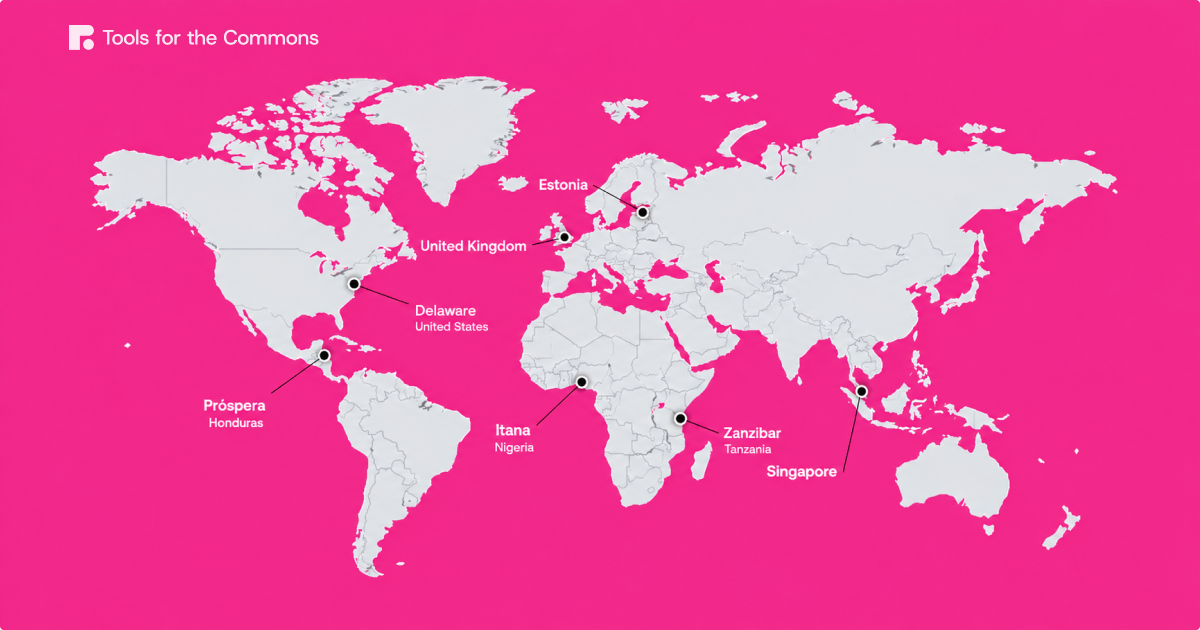
In this guide, we'll review seven options, including Próspera, Zanzibar, Itana, Singapore, Estonia, the United Kingdom, and Delaware, comparing their suitability for international SaaS operations.
Key Takeaways
- Choose a jurisdiction based on payment access, IP protection, tax treatment, and operational requirements.
- Próspera, Zanzibar and Itana offer zone-based routes; four established jurisdictions provide alternative business environments.
- TFTC’s DAZ supports incorporation in Próspera, Zanzibar and Itana, with invoicing and transaction records.
Best Jurisdictions for SaaS Companies Expanding Internationally
1. Próspera, Honduras
Próspera ZEDE, located on Roatán Island, Honduras, offers a distinct regulatory and tax framework for international technology businesses. Established SaaS companies can create an additional Próspera entity to manage eligible international operations, software licensing or new commercial arrangements without replacing their existing company.
Payments and Banking
Próspera's financial ecosystem includes Tower Bank, Arival Bank, Payoneer and Reap, supporting business banking, international payments and corporate spending. Through TFTC's DAZ platform, businesses can also access digital payment infrastructure, multi-currency transaction tracking and automated invoicing from their entity dashboard.
Intellectual Property
A Próspera entity can hold or license software rights. Honduras recognises copyright in computer programs, but ownership and licensing terms should be documented. Existing IP does not transfer automatically, so SaaS intellectual property protection requires proper agreements.
Tax Framework
Próspera taxes 10% of deemed taxable income, calculated as 10% of gross income, producing an effective 1% rate. The treatment of SaaS company income depends on applicable territorial rules and tax obligations elsewhere. DAZ by TFTC also supports business administration and cross-border operations through a centralized digital platform.
Requirements and Costs
Formation requires residency or a resident legal representative, a registered agent and office. Registration costs $150; annual residency is $130, agent services 99–250, and annual reports $100. Full residency requires $260 liability insurance. TFTC’s DAZ supports incorporation, invoicing and transaction records.
Limitations
Payment processor eligibility and recurring subscription billing access should be confirmed before incorporation. Assess whether the proposed entity structure fits their existing contracts, IP ownership and tax obligations.
2. Zanzibar, Tanzania
Zanzibar’s Digital Free Zone (ZDFZ) provides a digital-first framework for technology and service businesses operating across borders. Its Zone Company structure can suit SaaS businesses, software developers and remote-first companies seeking an additional entity for international operations. Unlike ordinary BPRA registration, incorporation takes place under the Zone's dedicated regulatory framework.
Payments and Banking
Incorporating through TFTC’s DAZ unifies your banking, fiat, and crypto operations under one roof. Rather than navigating disconnected services, you get a comprehensive dashboard to issue invoices, review transaction records, monitor balances, and process local or cross-border payments effortlessly.
Intellectual Property
Zanzibar’s Copyright Act protects computer programs and permits written assignment and licensing. Income from holding or licensing IP requires economic substance within the Zone.
Tax Framework
Zanzibar’s 2026 Tax Code delivers complete exemption from VAT, withholding, wealth, and capital gains taxes. Net income is taxed at 5% after business deductions, dropping to 0% for ten years for eligible Venture Creator startups.
A 15% rate applies to income from digital residents physically present over 183 days. Tanzanian citizens are excluded from income incentives, and IP-driven ventures must meet economic substance requirements.
Requirements and Costs
Forming a Zanzibar Zone Company via TFTC’s DAZ requires at least one director with an active $2/month Digital Residency. Tiered fees are based on shareholder count:
- Single-shareholder companies pay a $20 setup fee and $20 monthly subscription
- 2–5 shareholders cost $50 setup and $50 monthly
- 6–50 shareholders incur a $1,000 setup fee and $100 per month.
Limitations
Tax incentives do not remove overseas obligations. Confirm eligibility, substance and payment access.
3. Itana, Nigeria
Itana is a NEPZA-licensed Digital Special Economic Zone for technology and service companies. SaaS and software development fit its stated sectors, subject to approval. Its Free Zone Enterprise is distinct from ordinary CAC registration. It can support international SaaS business expansion across Africa.
Payments and Banking
A standard Itana setup secures multi-currency accounts across USD, EUR, GBP, and NGN. When you incorporate through TFTC’s DAZ, you elevate that foundation with dedicated cross-border infrastructure.
DAZ layers on a centralized financial dashboard that lets you issue invoices, trigger international payments, monitor cash balances, and audit transaction histories without the operational friction of traditional banking portals.
Intellectual Property
Nigeria’s Copyright Act 2022 protects computer programs. Document software ownership and licensing to support SaaS intellectual property protection.
Tax Framework
Qualifying Free Zone activities can benefit from:
- 0% corporate income tax: On eligible foreign-source income.
- VAT exemptions: On qualifying Free Zone transactions.
Transactions within Nigeria's domestic customs territory may attract standard taxes. Foreign capital can also be repatriated under the Free Zone framework.
Requirements and Costs
Itana requires KYC, company information, a business plan and approval for the proposed activity. Remote operation is permitted, without a local partner or expatriate quota requirement. Through TFTC, businesses can access incorporation and compliance support via DAZ.
Fees include:
- Setup fee: $1,035.
- Annual subscription: $1,265.
Limitations
Confirm activity approval, banking access and SaaS business tax treatment before proceeding.
4. Singapore
Singapore offers SaaS companies an established base for serving customers across Southeast Asia and the wider Asia-Pacific region. Its financial infrastructure, international business environment and access to regional markets make it attractive for companies building a presence in Asia.
Payments and Banking
Singapore has a mature banking and fintech ecosystem. Stripe supports Singapore-based businesses, including recurring billing and subscription payments. However, opening a corporate bank account and accessing payment services remain subject to provider approval.
Intellectual Property
Singapore's Copyright Act protects computer programs automatically. You can also register trademarks and patents to protect your software-related inventions and brand assets.
Tax Framework
The corporate income tax rate is 17% of chargeable income. Qualifying newly incorporated, tax-resident companies may access start-up tax exemptions during their first three years of assessment. Eligibility conditions apply.
Requirements and Costs
Foreign founders must engage a registered corporate service provider to incorporate. A Singapore company also requires:
- At least one ordinarily resident director.
- A registered Singapore office.
- A company secretary is appointed within six months.
ACRA charges S15fornamereservationandS300 for incorporation. Annual return filing costs S$60. Professional, secretarial and registered-address services incur additional fees.
Limitations
Singapore offers strong regional infrastructure, but maintaining a company involves local directorship and ongoing compliance costs. Banking access and tax incentives are not automatic.
5. Estonia
Estonia offers SaaS companies a digital route to establishing an EU-based business. Its e-Residency programme allows non-resident founders to register and manage an Estonian company remotely, making it relevant for businesses seeking a European operating base.
Payments and Banking
Estonian companies can apply to local banks and fintech providers. Stripe supports Estonian businesses, including subscription payments and recurring billing. However, account approval and eligibility depend partly on the residency of individuals associated with the account.
Intellectual Property
Estonian copyright law automatically protects computer programs without requiring registration. Clear agreements with employees and contractors help establish ownership of software developed for the company.
Tax Framework
Corporate income tax is generally deferred until profits are distributed. Distributed profits are taxed at an effective rate of 22%, calculated using the 22/78 formula. Retained profits can be reinvested without immediate corporate income tax.
Requirements and Costs
An Estonian private limited company (OÜ) requires a management board and annual financial reporting. Founders registering remotely need an e-Residency digital ID and, where applicable, a licensed contact person and Estonian legal address.
- Company registration: €265.
- E-Residency application: €150.
- Address and contact person: Approximately €200–€400 annually.
Limitations
E-Residency does not grant tax residency or guarantee banking access. If you manage the company from another country, local tax obligations may still arise. EU VAT rules also affect cross-border SaaS sales.
6. United Kingdom
The UK offers SaaS companies an established base for serving British customers and managing international operations. Its financial infrastructure, legal framework and access to a large business market make it a practical option for companies seeking a presence in the region.
Payments and Banking
The UK supports established payment providers such as Stripe, including subscription billing and recurring payments. A UK entity can therefore access payment infrastructure suited to SaaS revenue models, subject to provider approval and account requirements.
Intellectual Property
UK copyright law automatically protects original software as a literary work. SaaS companies should also use clear employee and contractor agreements to establish ownership of code and other intellectual property.
Tax Framework
Corporation Tax is 19% on profits up to £50,000 and 25% above £250,000, with marginal relief between these thresholds. UK VAT rules also matter: digital services sold to UK consumers are generally subject to VAT, while cross-border B2B services are generally taxed where the business customer belongs.
Requirements and Costs
A UK private limited company requires:
- At least one director, who does not need to live in the UK.
- A registered office address in the UK.
- Identity verification for directors and people with significant control.
Companies House charges £100 for online incorporation and £50 for the confirmation statement.
Limitations
A UK entity does not guarantee access to a bank account or payment processor. Annual accounts, tax filings and VAT obligations also create ongoing administrative work.
7. United States (Delaware)
A Delaware LLC can give an international SaaS company a US legal entity for serving American customers, working with US partners and accessing the country's business infrastructure. Delaware is popular for its flexible company laws, but the LLC structure needs to be assessed carefully against the business's tax and investment plans.
Payments and Banking
US-based LLCs can apply for payment services such as Stripe, which supports recurring billing and subscription payments. However, incorporation alone does not guarantee approval. Businesses must meet identity, tax identification, address and banking requirements.
Intellectual Property
US copyright law protects original software code automatically. Companies should document IP ownership through employee and contractor agreements, while trademarks can protect their product names and brands.
Tax Framework
A Delaware LLC is generally treated as a pass-through entity for US federal tax purposes: profits are reported by its members rather than taxed at the company level. However, foreign-owned LLCs may have US tax and reporting obligations, particularly where income is effectively connected to a US trade or business.
Requirements and Costs
Setting up a Delaware LLC requires:
- A registered agent with a physical Delaware address.
- A Certificate of Formation.
- An operating agreement outlining ownership and management.
The state charges a $400 annual LLC tax, due by June 1. Registered agent and formation service fees are additional.
Limitations
A Delaware LLC does not automatically create tax-free US operations or guarantee access to banking and payment providers. Foreign owners should assess federal filing requirements, tax exposure and obligations in their home country before incorporating.
How to Choose the Right Jurisdiction for a SaaS Business
The best jurisdiction for a SaaS business depends on how it operates, where its customers are located and what it needs the additional entity to achieve. Before choosing, consider:
- Customer markets: Where will most subscription revenue come from?
- Payment access: Can local banks and payment processors support the company's target markets and recurring billing?
- Intellectual property: Where will its software be owned and managed, and what SaaS intellectual property protection is available?
- Tax treatment: Does the company plan to reinvest profits or distribute them, and how will each option affect its SaaS business tax obligations?
- Substance and compliance: Can the company meet local operating, reporting and regulatory requirements?
- Business fit: Does the jurisdiction support its international company structure for SaaS and long-term expansion plans?
Incorporation abroad does not automatically remove tax, reporting or regulatory obligations in the company's existing jurisdiction. Check the rules in both jurisdictions before proceeding.
How TFTC Helps SaaS Businesses Incorporate Through DAZ
Setting up an international entity solves your legal presence, but it often leaves your finance team with an administrative headache. Traditional agents hand over company papers and walk away, leaving you to patch together disconnected software for invoicing, balance tracking, and payouts.
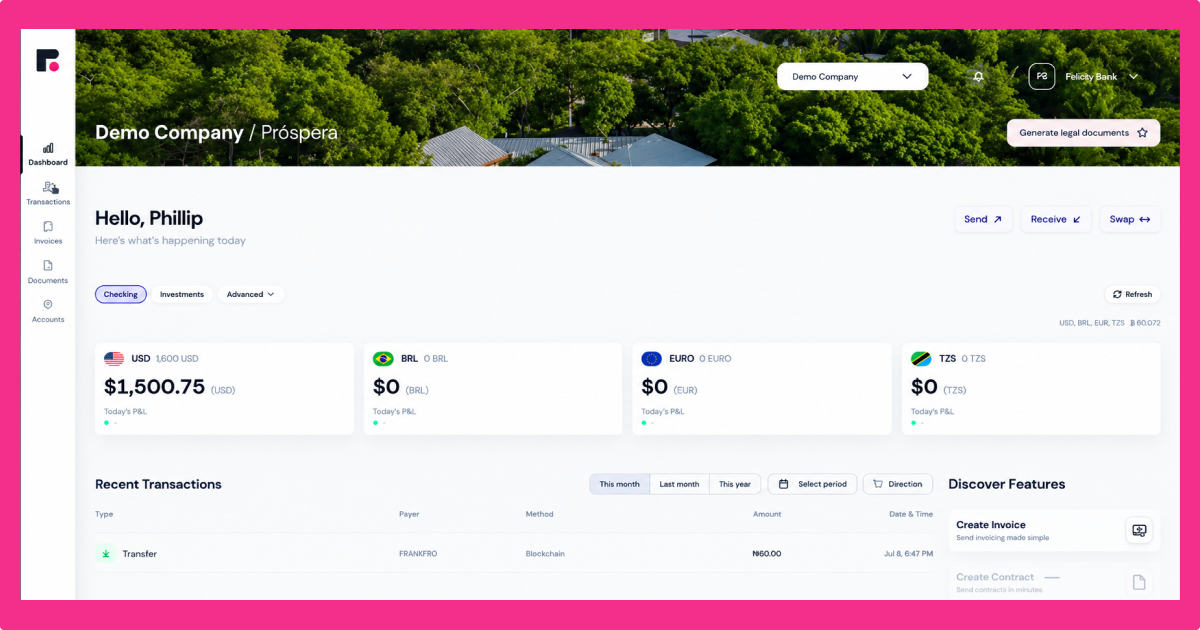
Tools for the Commons removes that operational friction. Incorporating in Próspera, Zanzibar, or Itana through DAZ links your new entity directly to an active business dashboard from day one:
- Direct billing workflows: Draft, issue, and manage client invoices directly within your portal, keeping receivables tied to your entity records.
- Unified transaction visibility: Monitor account balances in real time and audit complete transaction histories without messy spreadsheet exports.
- Streamlined payouts: Settle vendor invoices, contracts, and operational payments right from the dashboard without juggling separate banking portals.
Instead of paying for a standalone formation agent and assembling separate tools to run it, DAZ combines legal setup with the operational control you need to manage your business.
Explore DAZ Supported Jurisdictions and Register Your Entity